
Auditory Brainstem Response Testing is the First Step Toward a Life Full of Sounds
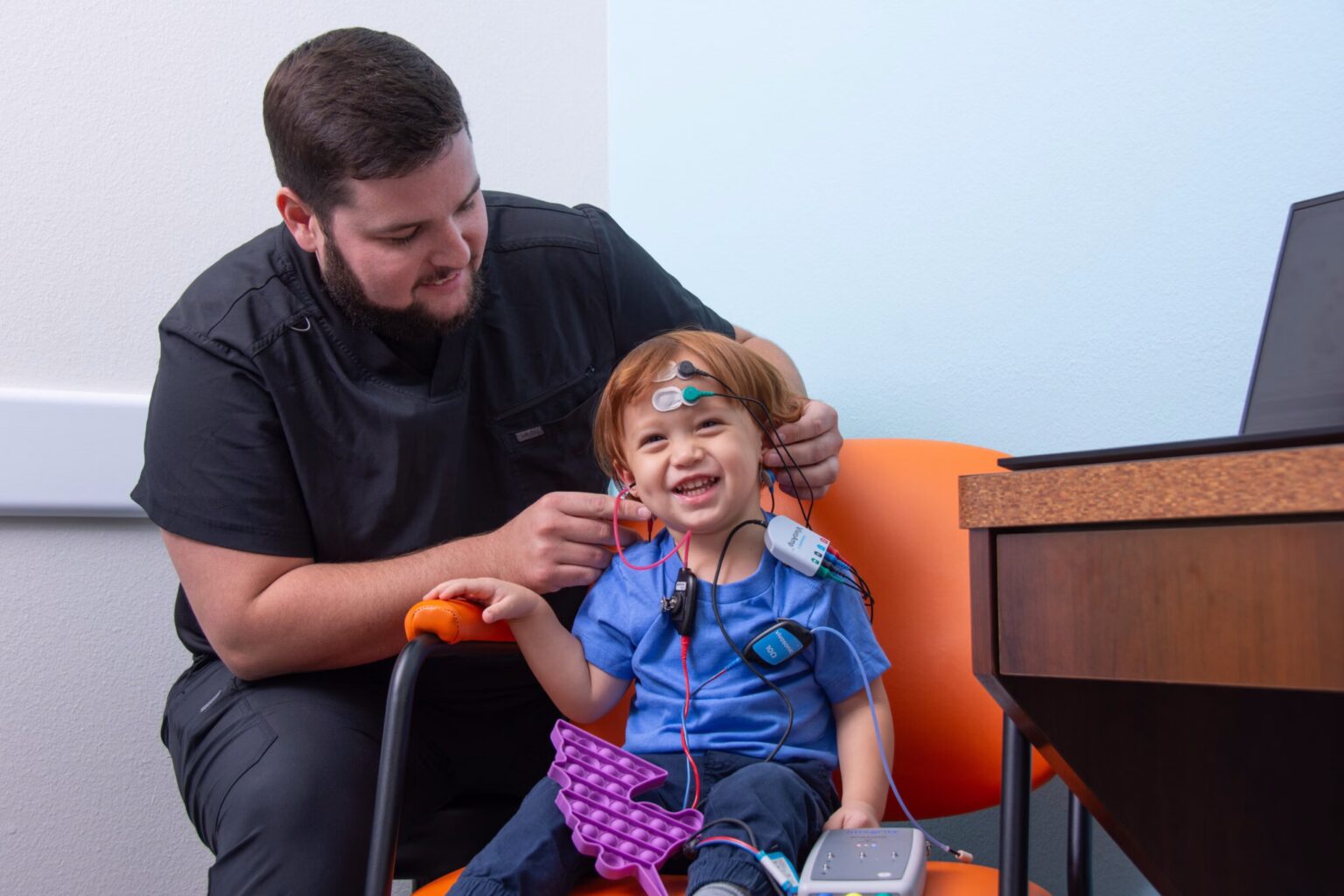
An Auditory Brainstem Response (ABR) is a test that can be performed on newborns, infants, young children, and any child that is difficult-to-test. An ABR is a test that measures the electrical activity of your child’s inner ear, nerve that connects the inner ear to the brain and the first part of the brain known as the brainstem. Your child’s Audiologist at ENT for Children can interpret the tracings created by an ABR to establish at what level your infant or child should be able to hear.
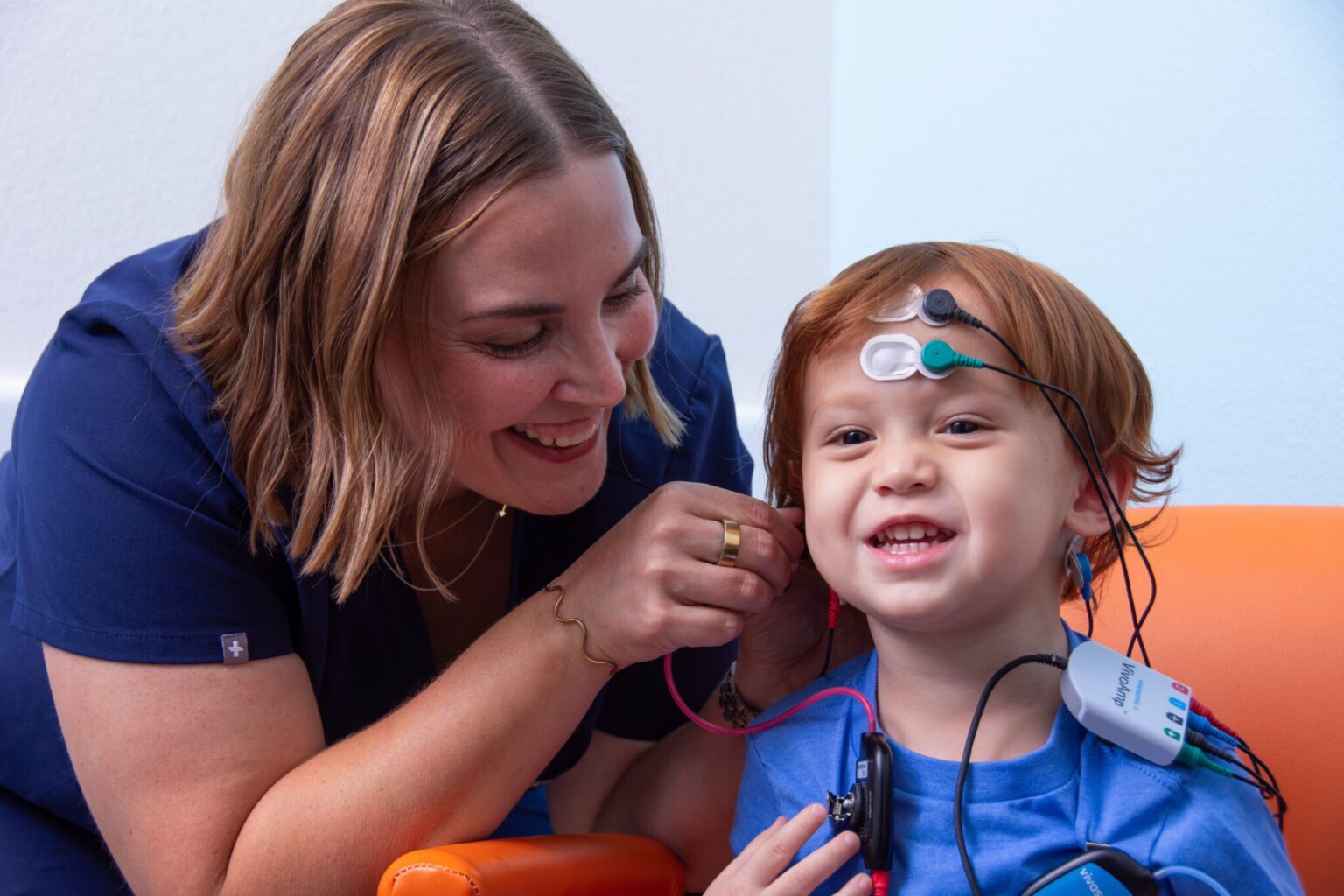
To complete an ABR the Audiologist with place a set of stickers on your child’s forehead and behind the ear and a soft probe in their ear canal. The stickers are actually sensors that will detect the electrical activity of your child’s ear. Through the probe the Audiologist is able to deliver series of clicking sounds or tones. Different loudness levels and pitches are tested to determine the softest level that is audible to your child.
If your child will allow the stickers to stay on their forehead and behind the ear and the probe to remain in the ear canal, then the ABR can be completed awake (un-sedated). If not, then completing an ABR will require anesthesia (sedation). We can schedule an un-sedated ABR at either of our locations. A sedated ABR is conducted under anesthesia at one of the surgery centers or hospitals where our physicians work.
If your child’s ABR is being completed un-sedated plan that the test will take a minimum of 45 minutes but often times takes longer. Testing is dependent on child’s cooperation and amount of information being obtained.
When Should My Infant Receive a Hearing Test?
Babies should be tested for hearing loss within one month of their birth. Many states require the exam prior to the child leaving the hospital for the first time.
If your child does not pass this initial screening, it’s important to get a full hearing exam within three months of age, and ideally as soon as possible. Doing so will ensure that your baby receives the care they need to fully engage with the many sounds of childhood.
What Are the Benefits of Early Detection?
Particularly before age 2, children use their hearing to develop communication, social-emotional and other important skills. Infants with hearing loss might experience developmental setbacks, but when hearing loss is treated, they can learn new skills and connect with the world around them.
What Are Common Causes of Infant Hearing Loss?
- Premature birth
- Frequent ear infections
- Infections like meningitis or cytomegalovirus
- Exposure to loud noises
- Family history of hearing loss
Following Up Is Crucial
If your child does not pass their initial hearing test, it’s important to make sure they receive care from a medical provider. Whether it’s caused by something temporary like fluid in the ears or a long-term condition, an audiologist will provide your child with the best treatment for their needs. Soon enough, they’ll be noticing all the sounds in their world.
Call ENT for Children for more information or to schedule an appointment.